Why the collection is difficult to document
The Sultan’s lifestyle is famously private. That privacy shapes the watch story. It limits photography. It keeps serial numbers out of view. It also discourages public discussion by anyone close to the source.
The result is predictable. Specific references get named. Exact specs get repeated. Hard evidence stays thin.
Most “confirmed” sightings sit in one of these categories.
- Official appearances where a watch is visible in a still image.
- Auction market material that cites Brunei provenance, a crest, initials, or a commission history.
- Manufacturer-adjacent stories linked to bespoke work, prototypes, or special-order dials.
Bespoke horology, special orders, and the appeal of the crest
The strongest thread in the Brunei narrative is commissioning. The Sultan is repeatedly described as a client for one-off work. That idea is plausible. It also matches how top-end Swiss watchmaking has operated for decades.
There is at least one clean example of the “made for the Sultan” claim in a major auction context. Sotheby’s offered a Gérald Genta prototype design described as made for the Sultan of Brunei. It was dated to the early 1990s. It also highlights the kind of discreet commissioning that sits behind the mythos. Sotheby’s: Gérald Genta prototype design made for the Sultan of Brunei
Collectors also talk about dials that carry a national emblem, a royal crest, or initials. Those details matter. They can also mislead. A crest can indicate a commission for the wider royal household. It can also point to a gift. It can even be added later, which is the uncomfortable part.
Brands most often linked to the Sultan
Patek Philippe
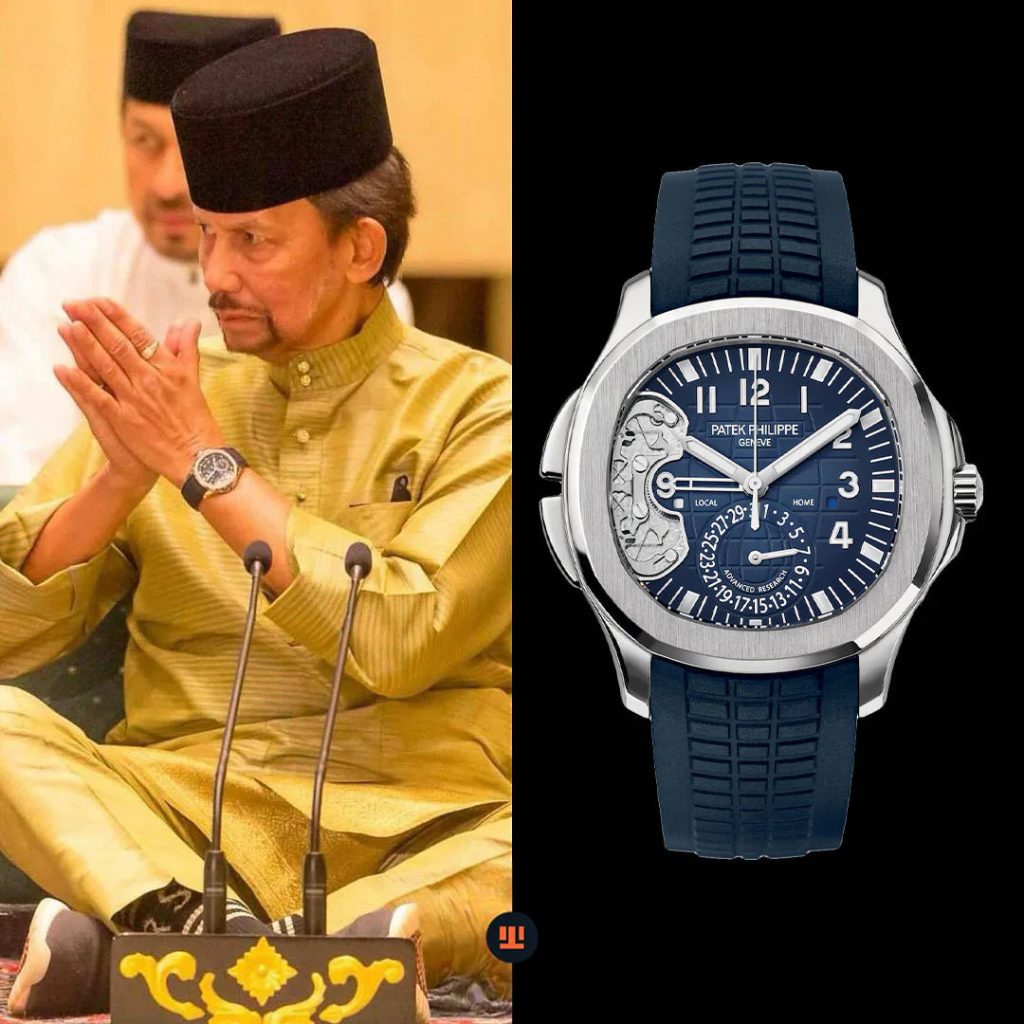
Patek Philippe is the brand most often associated with the Sultan’s high-complication taste. It fits the pattern of discreet prestige. It also fits the reality of bespoke ordering at the very top end of the market.
The “headline” rumour tends to involve a Sky Moon Tourbillon style commission. Details vary. Photos are inconsistent. Still, the model itself explains why it gets used as shorthand for peak Patek. Patek Philippe describes the Sky Moon Tourbillon ref. 6002R as combining 12 complications with extensive hand-engraving and enamel work. Patek Philippe: Sky Moon Tourbillon ref. 6002R-001
What’s safer to say is this. If you believe the reports, the Sultan’s Patek collection is not about “one good Nautilus”. It is about rare references, special dials, heavy complications, and orders that never appear in catalogues.
Rolex
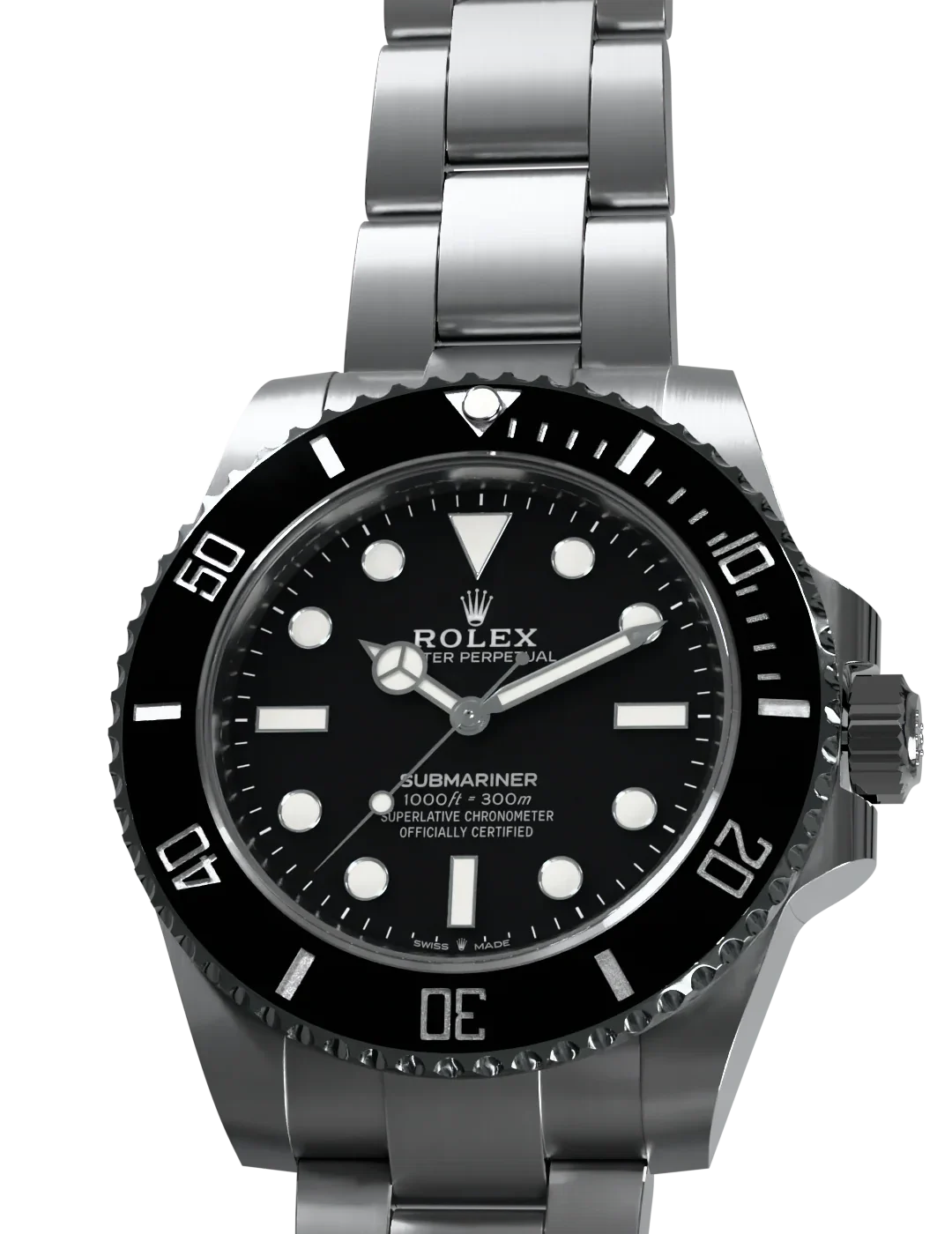
Rolex is often dismissed as too mainstream for this sort of story. That misses the point. Rolex becomes interesting at the commission level. Think unusual dials, gem-setting that’s unmistakably factory work, and pieces ordered in small batches for a specific circle.
The Daytona tends to get the attention. So does the Day-Date. Gem-set examples are frequently mentioned. The detail that matters is not the headline model name. It’s the specification. Dial, bezel, bracelet, and any markings that anchor it to a place or a household.
Audemars Piguet
Audemars Piguet sits neatly in the Brunei rumour mill. The Royal Oak era overlaps with the decades when special orders for the ultra-wealthy became more visible inside collecting circles.
The recurring claims involve Royal Oak perpetual calendars, skeleton work, and pieces ordered with non-standard dials. The 1990s get cited often. That’s also when many serious collectors now track “special order” behaviour with more interest than list price.
Richard Mille and the modern era
Richard Mille is a more recent inclusion in the story. It also suits the logic of modern trophy watches. Light materials, extreme engineering, and cases that are instantly recognisable across a room.
Online write-ups often point to sapphire-case tourbillons. They also cite pieces made in tiny numbers. The problem is verification. Without a clear photograph, a serial, or an auction trail, it stays in the “talked about” category.
Are “royalty-only releases” real?
Sort of. Brands do make watches that never hit public catalogues. Some are genuinely unique. Others are micro-runs for a private client group. In practice, a “royalty-only release” is usually one of three things.
- A standard reference with a special dial order.
- A gem-set or jewellery variant produced quietly.
- A one-off commission assembled through a brand relationship.
Do these pieces surface later. Yes, sometimes. Gifts get resold. Estates get unwound. Political tides change. When they do appear, the market reacts to provenance first. Condition comes next. The reference number matters less than people think.
Gifting, rumours, and the problem with certainty
The watch trade loves a gifting story. Brunei attracts more of them than most. Some may be true. Some may be misattributed. Many are impossible to confirm from the outside.
A sensible stance is mild scepticism. A watch said to be “from the Sultan” could belong to another senior royal. It could be a state-related commission. It could also be an unrelated piece with a Brunei link that has grown in the retelling.
How to assess a Brunei provenance claim
If you ever come across a watch presented as Brunei-connected, take your time. Provenance is not a vibe. It’s paperwork, markings, and a story that survives basic scrutiny.
- Look for contemporary documentation. Auction notes, original invoices, service papers, and letters carry weight.
- Inspect the dial printing closely. Crests and signatures should look period-correct. They should also suit the watch.
- Check engravings with suspicion. Caseback work can be original. It can also be added later.
- Prefer traceable chains of ownership. One credible prior owner beats ten anonymous “insider” claims.
When the story is weak, the watch should be priced as a watch. Nothing more.
Comparable watches you can actually buy
Most readers are not chasing palace commissions. They want the same brands in wearable form. That’s where the pre-owned market makes sense. It gives access to serious references without the theatre.
If you like the Patek side of this story, a Nautilus remains the obvious modern touchpoint. See our Patek Philippe 5711/1R-001 Nautilus.
If the Rolex angle is your thing, the Daytona is still the watch that draws collectors in. The clean, modern route is the Rolex 126500LN White Daytona.
If you’re more interested in complications, a Royal Oak perpetual calendar gives a lot of horology in one case shape. Have a look at the Audemars Piguet 26574ST Royal Oak Perpetual Calendar.
Whatever you wear, maintenance matters more than gossip. If your watch needs attention, our Service & Repairs page outlines the support we offer.
Frequently Asked Questions
Is there an official list of the Sultan’s watches?
No. The collection is not publicly catalogued. Most information comes from sightings, trade talk, and occasional auction references.
Do crest dials prove a watch belonged to the Sultan?
Not necessarily. A crest can indicate the wider royal household. It can also be linked to a gift. Proof needs documents, not just a symbol.
Why are Patek Philippe grand complications mentioned so often in this context?
Because they sit at the top of traditional Swiss watchmaking. They also suit discreet collecting. Patek’s Sky Moon Tourbillon is a common reference point for that reason.
How many watches does he own?
Nobody outside a tight circle can answer that with confidence. Claims of huge numbers exist. They’re rarely backed by evidence.
What should I buy if I like the idea of royal special orders?
Buy the best standard reference you can justify. Prioritise originality, condition, and proper documentation. Leave the palace stories to the auction catalogues.