In short
- Most Rolex sizes fall between 28mm and 44mm, with 36mm and 40 to 41mm the most familiar.
- Diameter is only part of the story: lug-to-lug length, thickness, bezel and bracelet decide how a watch wears.
- The Datejust 36 is the classic size; the Datejust 41 suits a larger wrist or a bolder look.
- Oyster is sporty, Jubilee is dressier and more supple, and President is reserved for gold and platinum.
- Clasps matter too: Easylink and Glidelock let you fine-tune the fit without tools.
Rolex sizes cause more uncertainty than almost anything else when people choose a watch. A difference of four or five millimetres sounds small on paper but looks very different on the wrist, and the bracelet changes the feel as much as the case. This guide sets out Rolex sizes by model, explains how each one wears, compares the Datejust 36 and 41, and explains the differences between the Oyster, Jubilee and President bracelets and the clasps that go with them.
How Rolex sizes are measured
Rolex quotes the diameter of the case, measured across the case and bezel, without the winding crown. It is a useful starting point, but it does not tell you everything. Two watches with the same diameter can wear quite differently, and it helps to understand why before you compare Rolex sizes across models.
- Diameter. The width of the case and bezel, excluding the crown. This is the number in a model's name, such as the Datejust 36.
- Lug-to-lug. The length from the tip of the top lugs to the tip of the bottom lugs. If this is longer than the top of your wrist is wide, the watch will overhang.
- Thickness. Diving models with thicker cases and crystals sit higher on the wrist than a slim Oyster Perpetual or Datejust.
- Bezel. A wide, rotating sports bezel or a polished gold bezel makes the dial look smaller and the watch look bolder; a smooth steel bezel keeps it understated.
- Bracelet. A broader bracelet gives a watch more presence; a finer one makes it look smaller.
Rolex sizes by model
The table below shows the Rolex sizes used for each of the main model families in recent years, and the bracelets each one usually comes on. Older generations of some models were made in different sizes, so always check the exact reference of a pre-owned watch.
| Model | Recent sizes | Usual bracelets |
|---|---|---|
| Oyster Perpetual | 28, 31, 34, 36, 41mm | Oyster |
| Lady-Datejust | 28mm | Oyster, Jubilee or President |
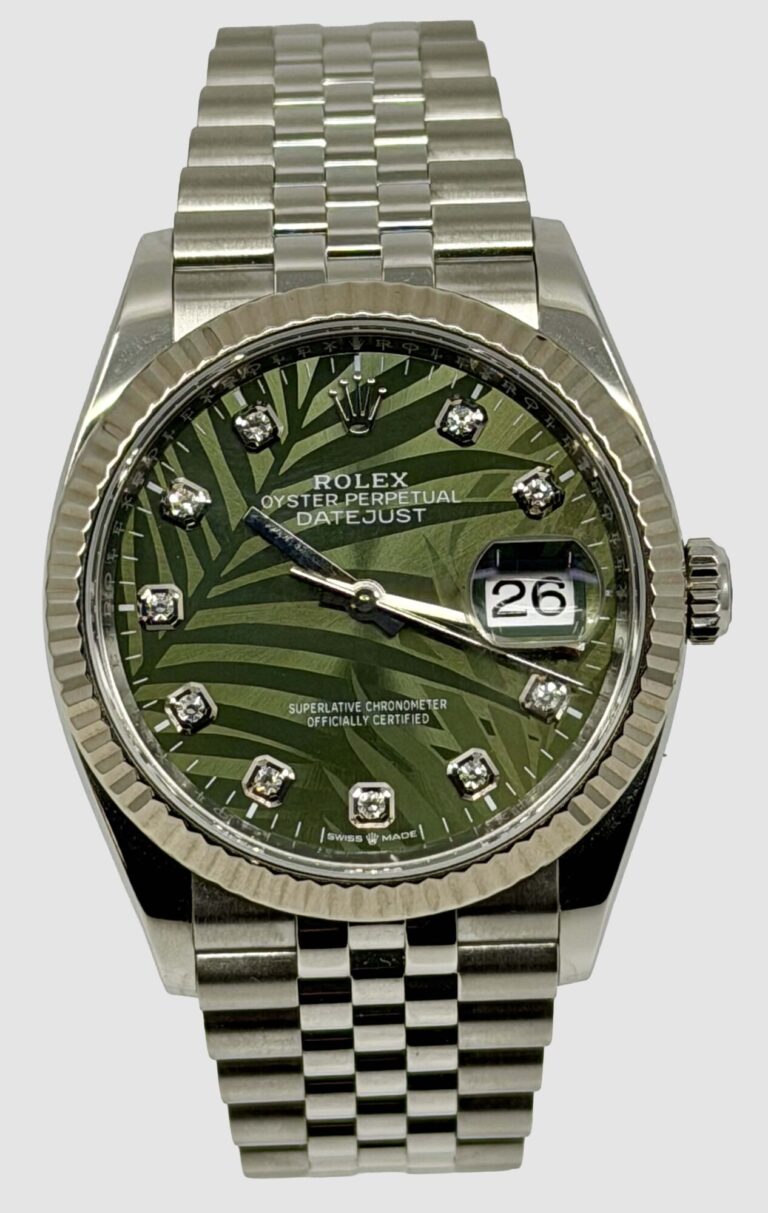
| Datejust | 31, 36, 41mm | Oyster, Jubilee or President |
| Day-Date | 36, 40mm | President |
| Explorer | 36, 40mm | Oyster |
| Air-King | 40mm | Oyster |
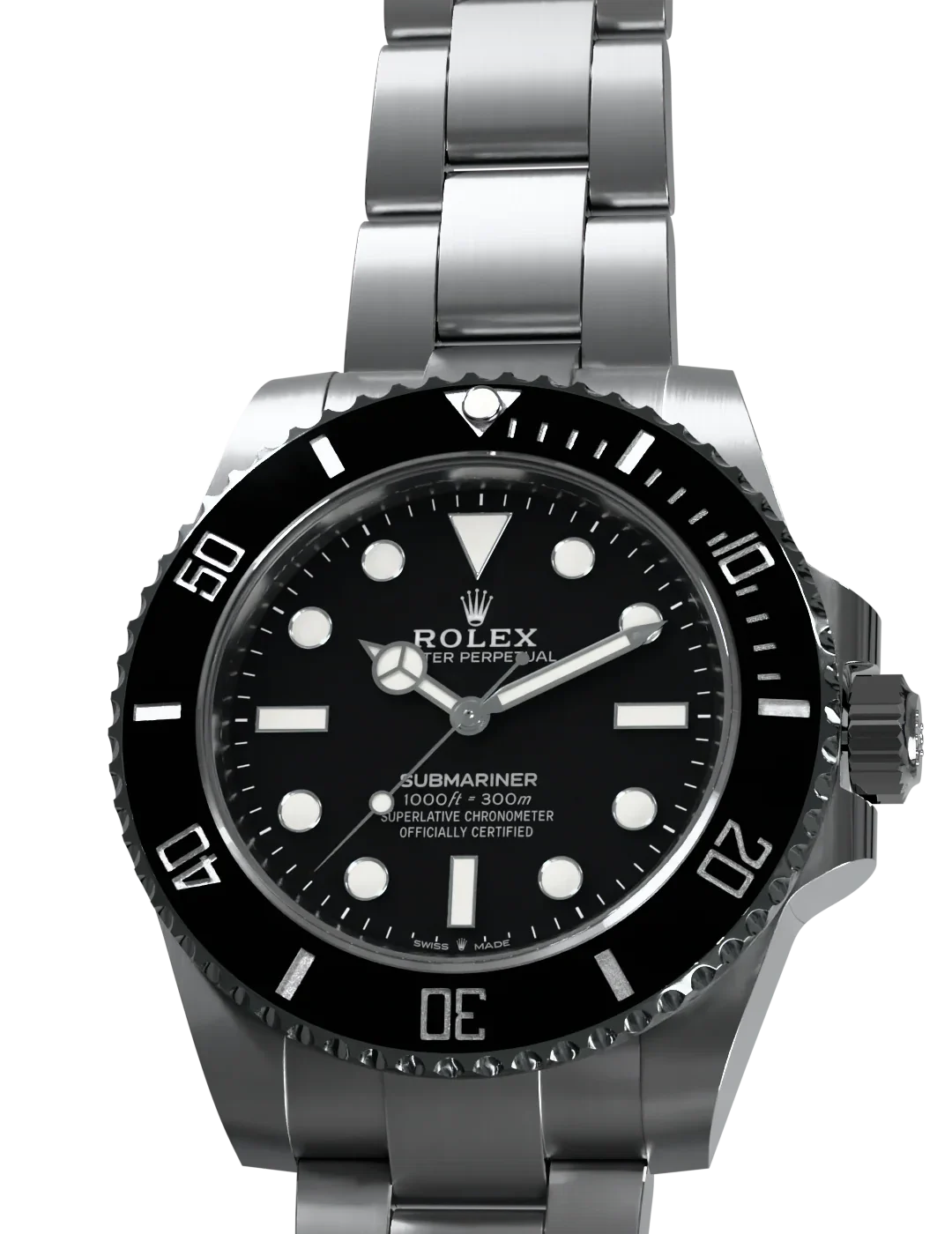
| Submariner | 41mm (40mm before 2020) | Oyster |
| GMT-Master II | 40mm | Oyster or Jubilee |
| Cosmograph Daytona | 40mm | Oyster or Oysterflex |
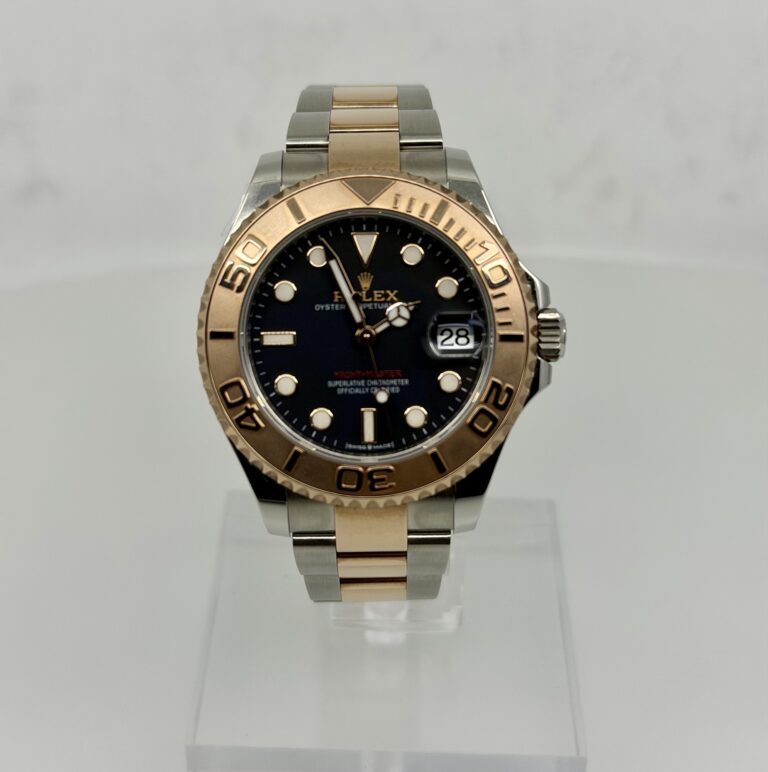
| Yacht-Master | 37, 40, 42mm | Oyster or Oysterflex |
| Explorer II | 42mm | Oyster |
| Sky-Dweller | 42mm | Oyster, Jubilee or Oysterflex |
| Sea-Dweller | 43mm | Oyster |
| Deepsea | 44mm | Oyster |
| Yacht-Master II | 44mm | Oyster |
Not every bracelet is offered on every version of a model. A steel Datejust, for example, comes on an Oyster or Jubilee bracelet, while the President bracelet is reserved for precious metals. The history of the Rolex Oyster explains how so many of these models grew from the same waterproof case.
How Rolex sizes wear on the wrist
It helps to group Rolex sizes into four bands rather than think in single millimetres. Within each band, the style of the watch matters as much as the number.
- Small, 26 to 31mm. The Lady-Datejust, the Datejust 31 and the smaller Oyster Perpetual models. Elegant and discreet, and ideal for a slim wrist.
- Classic, 34 to 37mm. The Datejust 36, Day-Date 36, Explorer 36, Oyster Perpetual 34 and 36, and Yacht-Master 37. The traditional Rolex sizes, worn by men and women alike.
- Modern, 39 to 41mm. The Datejust 41, Day-Date 40, Submariner, GMT-Master II, Daytona, Air-King and Explorer 40. The most familiar size for a modern sports watch.
- Large, 42 to 44mm. The Explorer II, Sky-Dweller, Yacht-Master 42, Sea-Dweller, Deepsea and Yacht-Master II. Bold watches with plenty of wrist presence.
Dial colour plays a part too. A light dial tends to look a little larger than a dark one of the same size, and a smooth bezel shows more dial than a fluted or rotating one. If you are between two Rolex sizes, these details can tip the balance.
Datejust 36 vs 41: two Rolex sizes compared
The Datejust is the model where the question of size comes up most. The Datejust 36 is the original size, introduced in 1945, and for decades it was simply the Datejust. The Datejust 41 arrived in 2016, replacing the Datejust II, and gives the same design a larger case and a broader bracelet.
- Presence. The 36 looks classic and understated; the 41 looks contemporary and more substantial.
- Wrist size. The 36 suits most wrists, including slim ones. The 41 is better proportioned on a larger wrist, or for anyone who likes a bolder watch.
- Dress and cuffs. The 36 slips under a shirt cuff easily. The 41 is more noticeable, which many owners want.
- Choice. Both come in steel and in steel and gold, with smooth or fluted bezels and Oyster or Jubilee bracelets. The 36 has historically offered more dial variations, including gem-set and motif dials.
The honest answer to Datejust 36 vs 41 is to try both. Many people who expect to want the 41 find the 36 feels just right, and the reverse happens too. You can see both sizes in our Rolex Datejust collection, and the guide to Rolex reference numbers explains how to tell the 126200 family of the 36 from the 126300 family of the 41.
How Rolex sizes have changed over the years
Rolex sizes have grown over the decades, though more slowly than many brands. For much of the twentieth century, 34mm and 36mm were standard men's sizes. Larger cases arrived gradually: the Day-Date II at 41mm in 2008, later replaced by the Day-Date 40; the 41mm Datejust II in 2009; and the Submariner's move from 40mm to 41mm in 2020.
The story is not one of steady growth, though. The Explorer went up to 39mm in 2010, then came back to 36mm in 2021, with a 40mm version added later. The Oyster Perpetual went from 39mm to 41mm in 2020 while keeping smaller sizes alongside. Rolex sizes, in other words, follow what suits each model rather than a single trend.
Rolex sizes when you buy pre-owned
Because Rolex sizes have changed, the same model name can mean different case sizes depending on the year. A pre-owned Submariner may be 40mm or 41mm, an Explorer may be 36mm or 39mm, and a large Datejust may be a Datejust II rather than a Datejust 41. The reference tells you exactly which one you are looking at.
Every listing on our site gives the case size, and we are happy to send extra photographs on the wrist or answer questions about how a particular watch wears. Comparing Rolex sizes from photographs alone is difficult, so if you are unsure, ask before you buy.
The Oyster bracelet
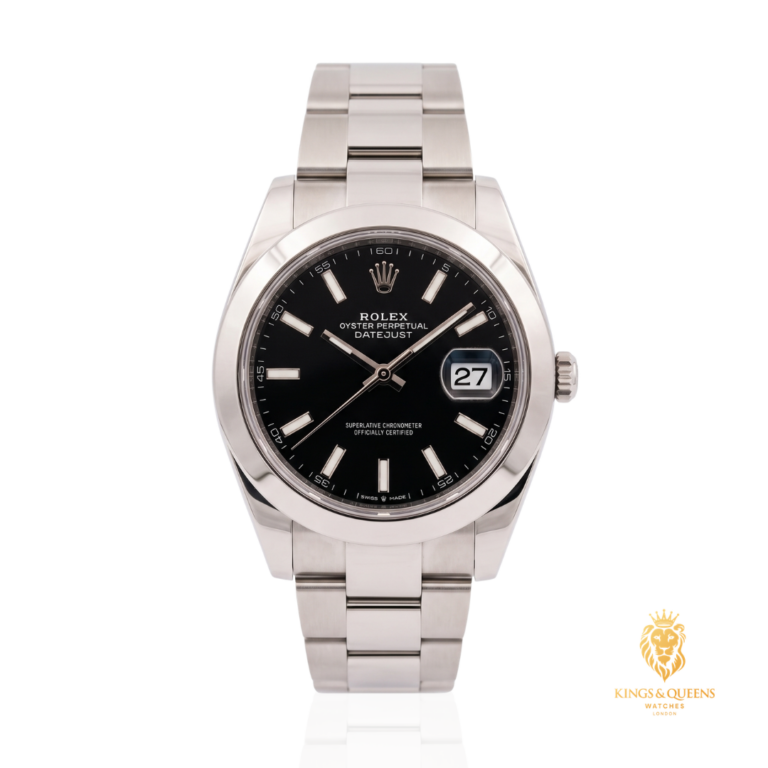
The Oyster bracelet is the one most people picture: three flat, broad links, robust and practical. It is the standard bracelet on the Oyster Perpetual, the Submariner, the Explorer and most of the professional models, and it is offered on the Datejust and some GMT-Master II and Sky-Dweller references. It spans the full range of Rolex sizes, from the 28mm Oyster Perpetual to the 44mm Deepsea. On sports models the links are usually brushed, which hides scratches well.
Modern Oyster bracelets have solid links and solid end links that fit the case closely, and they feel noticeably more substantial than older versions with hollow or folded links. If you are looking at an older watch, check the bracelet for stretch: a worn Oyster bracelet sags between the links when you hold the watch on its side.
The Jubilee bracelet
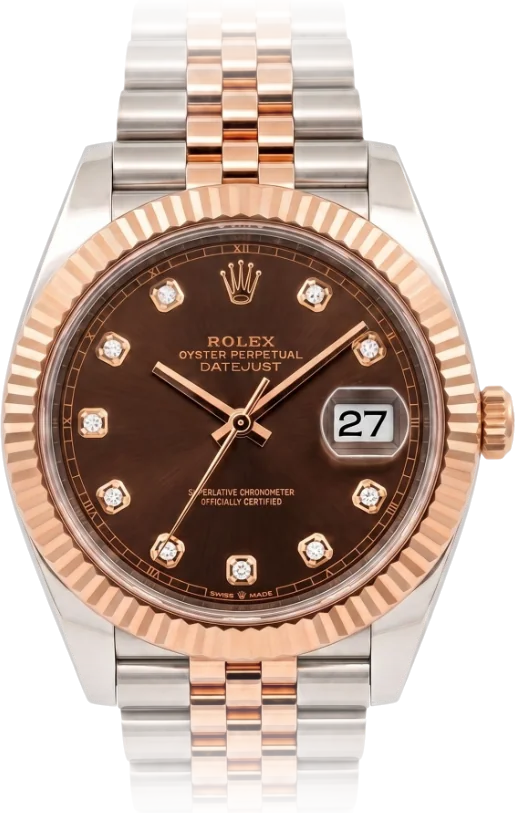
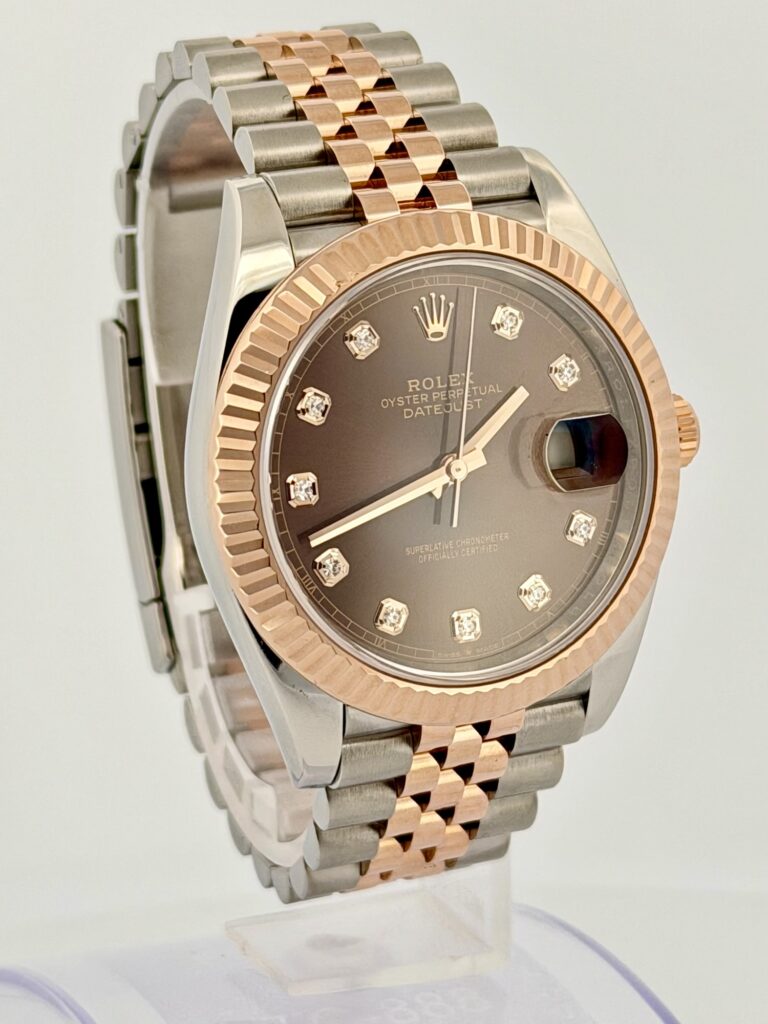
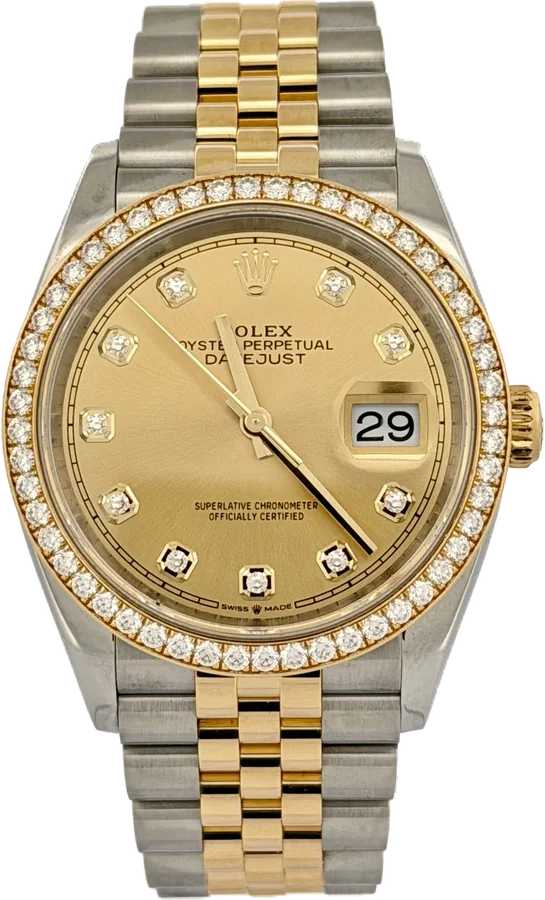
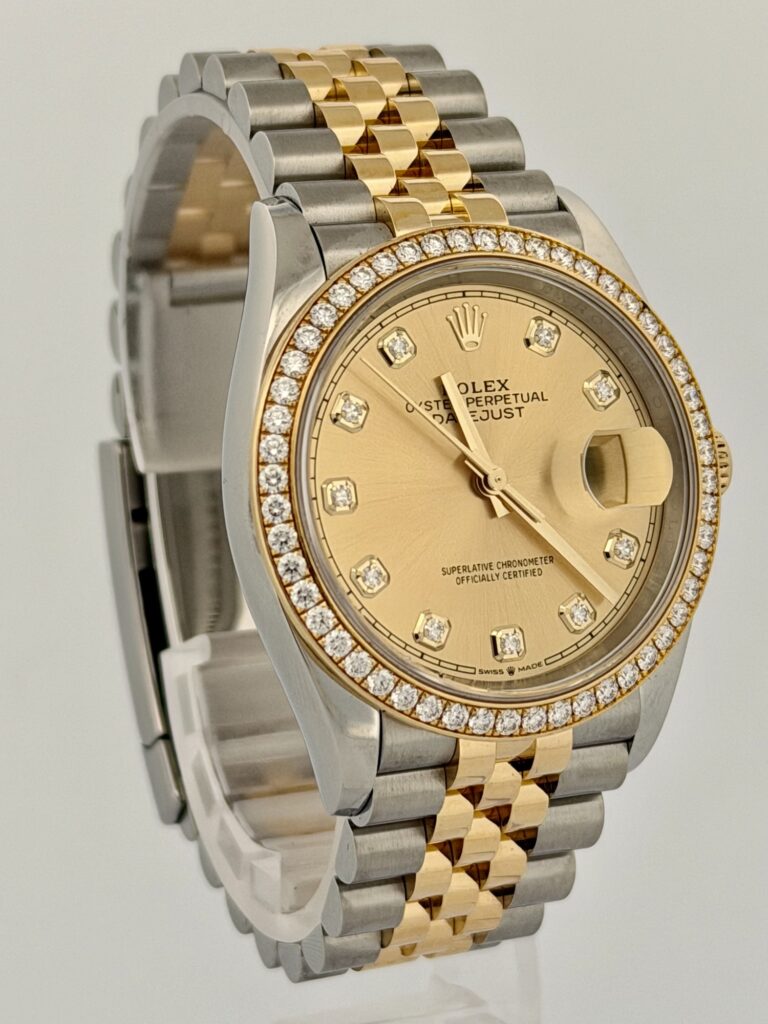
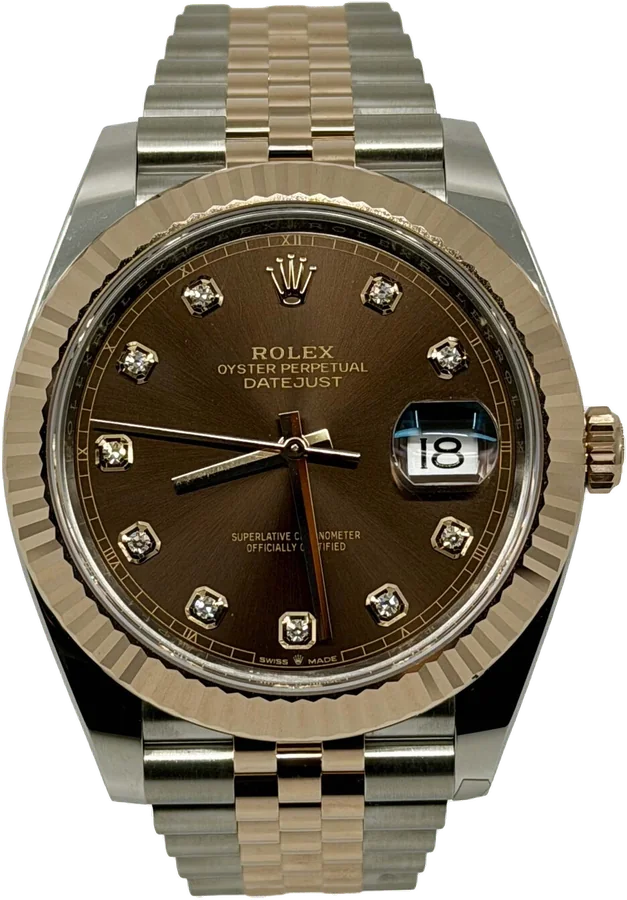
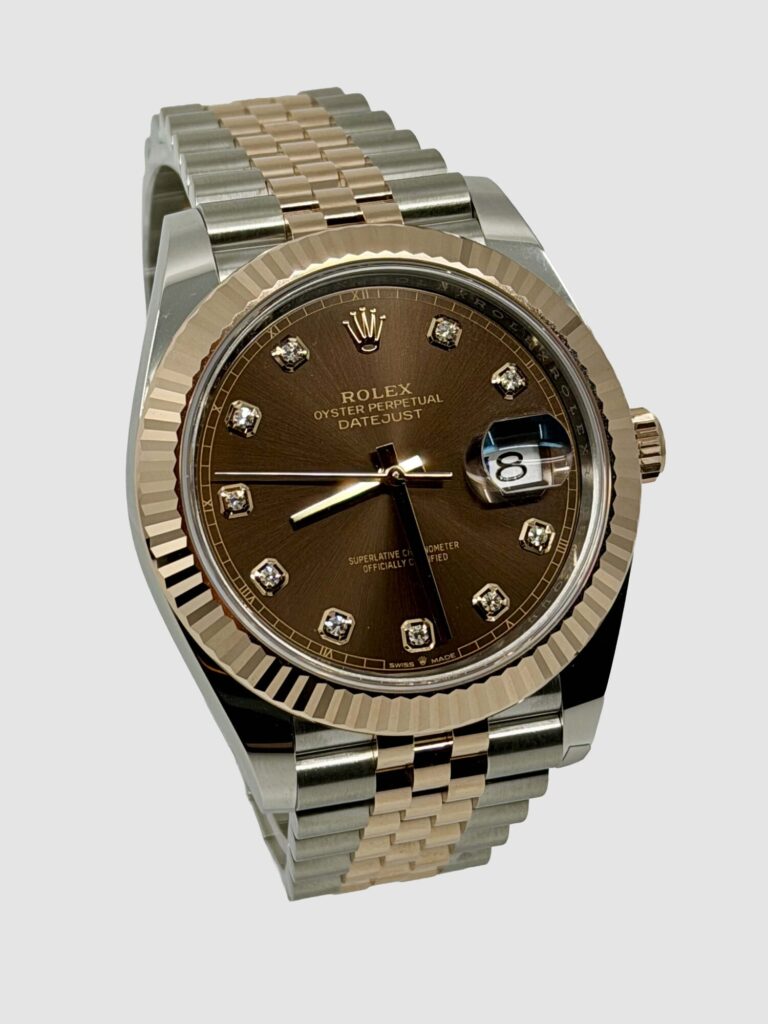
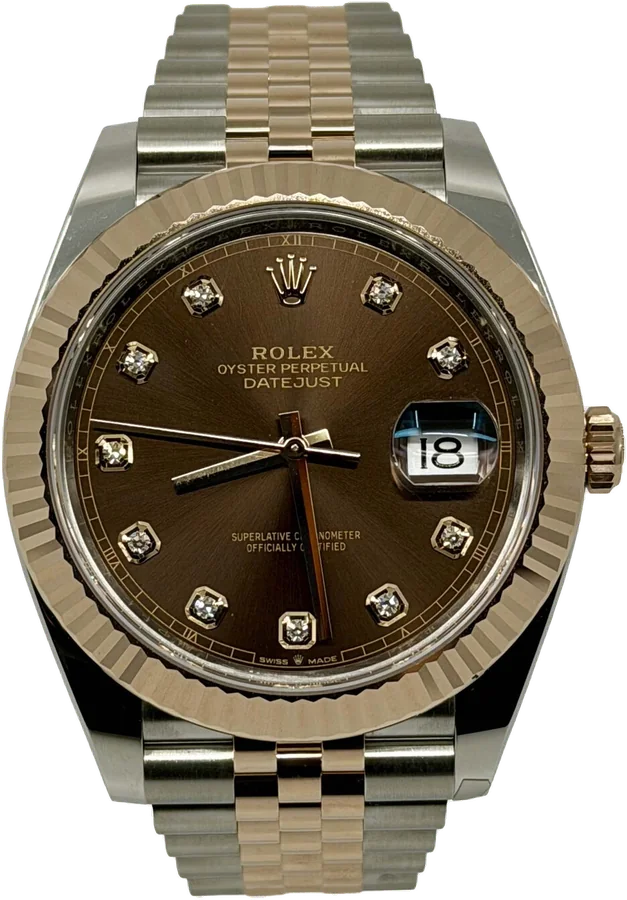
The Jubilee bracelet was created for the Datejust in 1945. It has five smaller links across its width, usually with polished centre links, and it is more supple than the Oyster, so it drapes around the wrist and feels lighter. On a two-tone watch the centre links are gold, which gives the classic Rolesor look.
On the smaller Rolex sizes, such as the Datejust 31, the Jubilee is especially popular. Once mainly associated with the Datejust, it now appears on some GMT-Master II and Sky-Dweller references too. Its polished centre links show fine scratches more readily than a brushed Oyster bracelet, which some owners like as patina and others prefer to avoid. If comfort is your priority, the Jubilee is often the better choice; if you want the most hard-wearing option, choose the Oyster.
The President bracelet
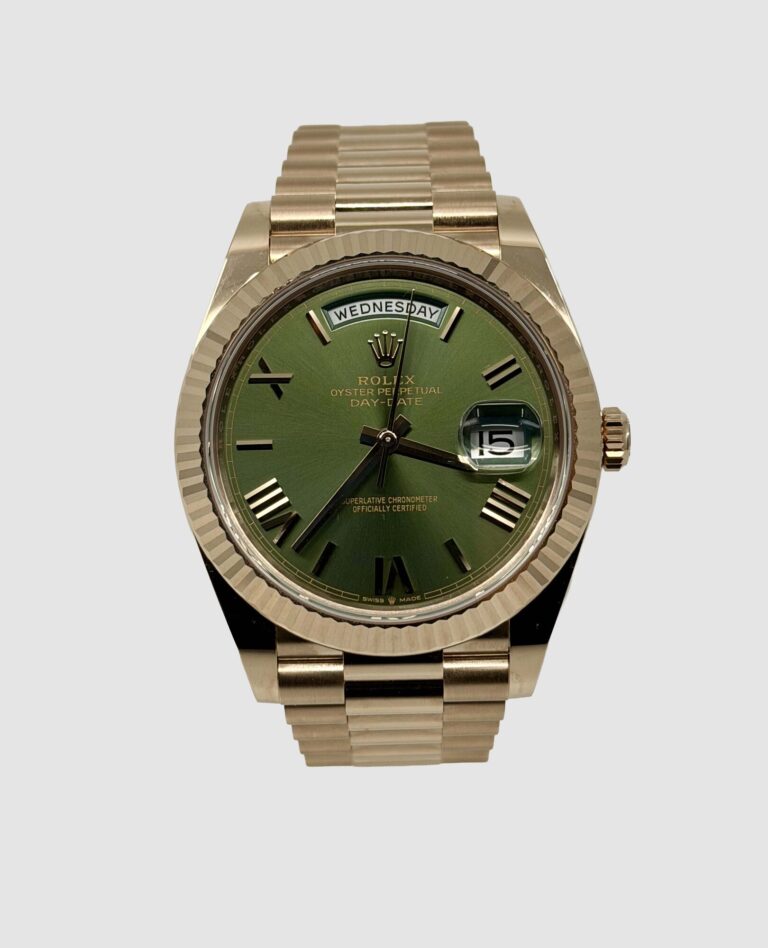
The President bracelet was made for the Day-Date in 1956. It has three rounded links across its width and is made only in 18ct gold or platinum. It is the most formal Rolex bracelet, and it also appears on precious-metal versions of the Datejust and Lady-Datejust.
Most President bracelets have a concealed Crownclasp, which hides the clasp beneath the links so the bracelet looks continuous around the wrist. The result is closer to fine jewellery than to a sports watch, and it is a large part of the Day-Date's appeal. You can see examples in our Rolex Day-Date collection.
Oysterflex and straps
The Oysterflex bracelet, introduced in 2015, looks like a rubber strap but is built around flexible metal blades over-moulded with black elastomer. It is fitted to selected precious-metal models, such as some Daytona, Yacht-Master and Sky-Dweller references, and gives a gold watch a lighter, sportier feel. Some of Rolex's dress watches come on leather straps.
Rolex clasps explained
The clasp affects comfort and security as much as the bracelet does, across all Rolex sizes. These are the names you will see in a listing:
- Oysterclasp. A folding clasp used on many Oyster bracelets.
- Oysterlock. A folding safety clasp with a hinged cover that stops it opening by accident. Found on most of the professional models.
- Crownclasp. A concealed folding clasp, opened by lifting the Rolex crown. Used on the President bracelet and on some other dress bracelets.
- Easylink. A comfort extension link built into the clasp that lets you lengthen the bracelet by about 5mm without tools, useful on a warm day.
- Glidelock. An extension system on diving models such as the Submariner, Sea-Dweller and Deepsea. It adjusts the length in small steps without tools.
Getting the bracelet length right
Whichever of the Rolex sizes you choose, the bracelet decides whether the watch is comfortable. A well-fitted bracelet sits snugly without pinching, and the watch head stays on top of the wrist rather than sliding round. Bracelets are lengthened or shortened by adding or removing links, and most clasps also have a few small adjustment positions for fine-tuning.
This is why spare links matter. A watch that has been shortened for a slim wrist may not fit a larger one without the links that were removed. When you buy, ask whether the spare links are included; when you sell, bring them with the watch, because a complete set is valued higher.
Wrists change size during the day and with the weather, so aim for a fit that is comfortable in the evening as well as the morning. If your watch has Easylink or Glidelock, use it rather than leaving the bracelet loose.
Rolex sizes for women and men
Rolex sizes are not divided by gender in any strict sense. Many women wear 36mm and 40mm watches, and many men choose a 36mm Datejust or Explorer. Smaller sizes such as the 28mm Lady-Datejust and the Datejust 31 are popular ladies watches, and our guide to choosing a ladies Rolex covers them in detail.
What matters is the proportion between the watch and the wrist. As a rough guide, the lugs should sit within the width of the top of your wrist, and the watch should not dominate the arm unless that is the look you want.
How to choose between two Rolex sizes
- Measure your wrist. Wrap a soft tape or a strip of paper where you wear a watch and note the length.
- Compare lug-to-lug, not just diameter. A watch with longer lugs wears larger than its diameter suggests.
- Try both on. Wear each for a few minutes, look in a mirror, and take a photograph from a normal distance. Watches look larger close up than they do to everyone else.
- Think about your clothes. If you wear shirts with fitted cuffs, a thinner, smaller watch will be easier to live with.
- Choose the bracelet with the case. A Jubilee makes a watch feel lighter and dressier; an Oyster makes it feel sportier and more solid.
The simplest way to compare Rolex sizes is to see them side by side. You are welcome to book a private appointment at our Hatton Garden showroom and try different sizes and bracelets on, with no obligation. If you would like to trade a watch that no longer fits, our free valuation is the place to start, and you can part exchange it towards a better-fitting one in a single transaction.
If you buy online, every pre-owned watch comes with our 12-month mechanical warranty from delivery, unless the listing says otherwise, UK delivery is free, fully insured and signed for, and you have 14 days to return a watch for a full refund.
Frequently asked questions
Which Rolex sizes are the most versatile?
For most people, 36mm or 40 to 41mm. The 36mm Datejust and Oyster Perpetual suit a wide range of wrists and occasions, while the 40 to 41mm sports models and Datejust 41 suit anyone who wants a little more presence.
Is a Datejust 36 too small for a man?
Not at all. The Datejust 36 was the standard men's Datejust for decades and is still worn by many men today. It suits small and average wrists especially well, and it looks right with a suit.
Oyster or Jubilee: which is more comfortable?
Many people find the Jubilee more comfortable because its smaller links make it more supple. The Oyster feels more solid and hides scratches better. Both are excellent; it comes down to the look and feel you prefer.
What does lug-to-lug mean?
It is the distance from the tip of the upper lugs to the tip of the lower lugs. It tells you how much of your wrist the watch covers from top to bottom, which is often a better guide to fit than the diameter.
Can I change the bracelet on my Rolex?
Some references were offered on more than one bracelet, so a change is possible with the correct genuine bracelet and end links for that reference. Keep the original if you can, because a watch with its original bracelet is easier to sell.
Do larger Rolex sizes cost more?
Within the same model and metal, a larger case usually sits higher on Rolex's price list. But metal, diamonds and demand matter far more than a few millimetres, especially on the pre-owned market.
Can I try different Rolex sizes before I buy?
Yes. Book a private appointment at our Hatton Garden showroom and try the sizes and bracelets you are considering. A £100 deposit can reserve a watch for 3 working days while you arrange to come in.
Datejust in stock now
Kings & Queens Watches is an independent dealer and is not affiliated with Rolex.