In short
- There is no single test for how to tell if a Rolex is real. The best fakes now pass many of the classic checks.
- Start with what you can see: the rehaut and serial, the crown etched in the crystal, the cyclops and the dial.
- Then the feel: weight, bracelet, clasp, crown and the sweep of the seconds hand.
- Papers only help when they match the watch, and papers can be forged too.
- The final word belongs to a specialist who can open the case and inspect the movement.
Knowing how to tell if a Rolex is real has never mattered more. Counterfeits have improved to the point where a photograph, or even a quick look in the hand, is no longer enough. This guide explains how to tell if a Rolex is real using the checks you can make yourself, what each check can and cannot tell you, and why the last word should always come from a specialist who handles genuine watches every day.
Why spotting a fake is harder than it used to be
Ten or twenty years ago, how to tell if a Rolex is real was a simple question. Most fakes gave themselves away quickly: a ticking quartz movement, a misspelt dial, a lightweight case. The fakes made today are different. The better ones copy the rehaut engraving, the ceramic bezel, the bracelet and even the look of the movement, and they are sold with convincing boxes and cards.
There is a second problem that gets less attention. Some watches are genuine Rolex in part: a real case with a replacement dial, a real movement in a copied case, or a genuine watch with aftermarket diamonds. These hybrid watches are harder to spot than an outright fake, and they are worth far less than an original. Our article on why fake Rolexes are harder to spot looks at this in more detail.
That is why learning how to tell if a Rolex is real is really about building a picture. Each check rules some fakes out. Together, and in the hands of someone experienced, they give you an answer you can rely on.
How to tell if a Rolex is real before you even see it
The first checks have nothing to do with the watch. Most people who end up with a fake were warned by the circumstances, not the dial.
- The price. Genuine Rolex watches trade in a well-known market. A price well below similar watches is the clearest warning sign there is.
- The story. A seller who cannot say where the watch came from, when it was bought or whether it has been serviced is a seller to question.
- The pressure. Urgency, other buyers waiting, or a discount for paying today are all ways to stop you checking.
- The payment. Be wary of anyone who wants payment to a third party, in cash on a street corner, or in any way you cannot trace.
- The access. A genuine seller will let you see the watch, ask for more photographs or have it inspected.
1. The rehaut and the serial number
For anyone learning how to tell if a Rolex is real, the rehaut is the best place to begin. On modern Rolex watches, the word ROLEX is engraved again and again around the rehaut, the inner ring between the dial and the crystal, with the serial number engraved at 6 o'clock. The letters should be crisp and evenly spaced, and they should line up neatly with the minute markers on the dial. Uneven depth, wandering letters or a serial that looks printed rather than engraved are all warning signs.
On older watches there is no rehaut engraving. The serial is engraved on the case between the lugs at 6 o'clock and the reference between the lugs at 12 o'clock, both hidden by the bracelet. Genuine engraving is fine, sharp and clean. Removing a bracelet can scratch the case, so this is a job for a dealer or watchmaker.
Whatever the age, the serial and reference should match the papers. But a serial on its own proves little, because counterfeiters copy genuine numbers, and the same serial can turn up on many fakes. Our guide to Rolex serial numbers explains where to find them and what they tell you.
2. The crown etched in the crystal
Since the early 2000s, Rolex has laser-etched a tiny crown logo into the sapphire crystal at the 6 o'clock position. On a genuine watch it is so fine that most people cannot see it without a loupe and the light at the right angle. On many fakes it is either missing or far too visible, sometimes printed on the surface rather than etched into it.
Its absence is not proof on its own: older Rolex watches made before the etching was introduced never had it. Its presence is not proof either, because the better fakes now copy it. Treat it as one piece of the picture: knowing how to tell if a Rolex is real always takes more than one check.
3. The cyclops lens
On models with a date, Rolex fits a small magnifying lens, the cyclops, over the date window. It magnifies the date two and a half times, so the numerals fill the lens and are easy to read at a glance. Many fakes use weaker magnification, which leaves the date looking small, or position the lens slightly off-centre.
Look at the watch straight on and at an angle. The date should sit centrally in the lens and look large and sharp. If you are learning how to tell if a Rolex is real, put a known genuine watch beside the one you are checking; the difference in magnification is often obvious once you have seen both.
4. The dial and hands
A loupe is the most useful tool for anyone working out how to tell if a Rolex is real, and the dial is where it earns its keep. Rolex dials are made to an extraordinary standard. Printing should be crisp, fine and perfectly even, with no smudging, bleeding or uneven spacing, even under a loupe. Applied hour markers should be perfectly aligned and cleanly finished, and the luminous material should be applied evenly, with no gaps or overspill.
Check that the name on the dial matches the reference. A Datejust dial on a case that was never a Datejust, or a model name that Rolex never used with that bezel, is a sign of a fake or a watch assembled from parts. Look at the date wheel too: the numerals should be neat and centred in the window.
A refinished dial, sometimes called a redial, can sit in an otherwise genuine watch. It may look perfect to the naked eye, but it changes the value considerably, which is another reason to have any watch checked by a specialist.
5. The seconds hand and the movement
A mechanical Rolex does not tick once a second. Its seconds hand moves in a smooth sweep made up of many small steps each second. A seconds hand that jumps once a second usually means a cheap quartz movement, and on a model Rolex only made as a mechanical watch, that settles the question. The exceptions are a small number of genuine Rolex quartz watches, such as the Oysterquartz, which do tick.
This is where a lot of online advice on how to tell if a Rolex is real stops, and it is exactly where modern fakes pass. A smooth sweep is not proof. Most of today's fakes use automatic movements, and some are built to look like a Rolex calibre. Listening is no more reliable: a watch you can hear ticking clearly across a room is a bad sign, but a quiet watch can still be fake.
The movement itself is where the answer usually lies, and checking it means opening the screw-down caseback. That needs the right tools and should only be done by a specialist, because a careless attempt can scratch the case or damage the seals. A specialist looks at the calibre, its finishing, its components and its markings, and compares them with what a genuine movement of that reference should have.
6. Weight, case, bezel and crown
Weight is often the first thing people mention when they ask how to tell if a Rolex is real. A genuine Rolex feels dense and solid. Its case and bracelet are made from steel or precious metal, without hollow sections. A watch that feels light is a warning sign, but weight only rules out the cruder fakes, because some are made from steel and feel close to right.
- Case finishing. The lines between brushed and polished surfaces should be crisp and even, with no rough edges.
- Bezel action. On a Submariner the bezel turns one way only, with firm, precise clicks. On a GMT-Master II it turns both ways with 24 positions. Loose, gritty or vague action is a concern.
- The crown. It should screw down smoothly and feel secure, and the Rolex crown logo on it should be crisp and well defined.
- The caseback. Most Rolex models have a plain, solid caseback. A clear caseback on a model that should have a solid one, such as a Submariner or Datejust, is a red flag, although a few genuine current models do have one.
7. The bracelet and clasp
A modern Rolex bracelet is made to fine tolerances. The links should be solid, with no rattle and no sharp edges, and the end links should fit the case closely. The clasp should open and close firmly and cleanly, and the engraving inside it should be crisp. Features such as Rolex's Easylink extension or Glidelock adjustment should work smoothly.
For a quick lesson in how to tell if a Rolex is real, pick up the bracelet. Fake bracelets are often the easiest part to spot: rough edges between links, loose pins, flimsy clasps and engraving that looks stamped or sandy. Remember that a bracelet can be swapped, so a genuine bracelet does not guarantee a genuine watch, and an aftermarket bracelet does not make a genuine watch fake.
8. Box and papers
Papers can support a watch's story, but they cannot prove it. Check that the warranty card shows the same reference and serial as the watch, that the date of sale makes sense for the watch's age, and that the card itself looks and feels right. Boxes are easy to buy separately and prove nothing.
Forged cards exist, and genuine papers can be paired with the wrong watch. That is why knowing how to tell if a Rolex is real always comes back to the watch itself. Our guide to box and papers explains what a full set includes and how to check it.
9. Real is not the same as original
A watch can be a genuine Rolex and still not be what it appears. Replacement dials, hands, bezels or bracelets, diamonds set after the watch left Rolex, and heavy polishing all change what a watch is worth, sometimes dramatically. A seller should tell you about any of these.
When you ask how to tell if a Rolex is real, ask a second question too: is everything on it original? A good dealer will answer both, in writing.
10. Ask a specialist
Every check above has a way round it, and the most convincing fakes are designed to pass the tests people read about online. A specialist does something different: they compare the watch against the many genuine examples they have handled, under magnification, with the right tools, and they look inside. That is the honest answer to how to tell if a Rolex is real: check what you can, then let a specialist confirm it.
At Kings & Queens, every watch is inspected and authenticated by experienced watch specialists before it is offered for sale. Its serial number, bracelet number, movement identifiers and case markings are recorded. If you are selling or part exchanging a watch with us, it is authenticated in person before the price is confirmed.
Myths about how to tell if a Rolex is real
Plenty of the advice on how to tell if a Rolex is real is out of date, or only half true. These are the claims we hear most often.
- "A real Rolex doesn't tick." Partly true: the seconds hand sweeps. But most fakes now sweep too, so this only rules out the cheapest.
- "Check the weight." A light watch is suspicious, but a heavy one is not necessarily genuine.
- "It has papers, so it's real." Papers can be forged or belong to another watch.
- "A clear caseback means it's fake." Usually, on the classic models. But a few genuine current Rolex models do have one.
- "The serial checks out online." Counterfeiters copy real serials, so a genuine-looking number proves nothing.
Counterfeiting is a problem across the whole watch industry, which is why how to tell if a Rolex is real is such a common question. The background to counterfeit watches explains how widespread it has become.
Buying a genuine Rolex with confidence
The safest way to avoid a fake is to buy where authentication, a warranty and the right to return come as standard. Learning how to tell if a Rolex is real is useful, but you should not have to rely on your own checks alone.
- Inspected and authenticatedEvery watch is checked by experienced specialists, with serial numbers and components verified before it is offered.
- 12-month warrantyPre-owned pieces carry a 12-month warranty against movement defects. Unworn watches carry the manufacturer's own cover.
- Fully insured deliveryFree, fully insured and signed-for delivery across the UK.
- 14-day returnsFourteen days to change your mind from the day your watch arrives. We cover the return postage.
- Authenticated before sale. Every watch we offer is inspected and authenticated by experienced watch specialists, and its numbers are recorded.
- In stock and open to inspection. Unless a listing says otherwise, every watch is physically held in stock and available for inspection before dispatch. View it at our Hatton Garden showroom by appointment.
- Clear about box and papers. Every listing states whether the watch comes with its box and papers.
- Covered by a warranty. Pre-owned watches come with our 12-month mechanical warranty from delivery, unless the listing says otherwise. See our warranty page.
- Delivered securely, with time to decide. UK delivery is free, fully insured and signed for, and you have 14 days to return a watch for a full refund. For fraud prevention we may ask for identity or payment verification and ship only to verified addresses.
If you own a Rolex and want to know what it is worth, our free valuation is the place to start. There is no obligation, and quick initial valuations can be done from photographs on WhatsApp.
Frequently asked questions
How to tell if a Rolex is real without opening it?
You can rule a lot out without opening the case: the seconds hand, the cyclops, the rehaut engraving, the dial printing and the bracelet will expose a crude fake in seconds. The better fakes pass all of those, so the dependable answer still comes from a specialist inspection that includes the movement.
Can you tell if a Rolex is real from photographs?
Photographs can rule out obvious fakes and show whether the numbers match the papers, but they cannot confirm a watch is genuine. When it comes to how to tell if a Rolex is real, there is no substitute for checking the watch in person.
Do fake Rolex watches tick?
Cheap ones with quartz movements tick once a second. Many fakes now use automatic movements with a sweeping seconds hand, so the seconds hand alone is not how to tell if a Rolex is real.
Does a serial number prove a Rolex is real?
No. Counterfeiters copy genuine serial numbers, and the same number can appear on many fakes. The serial is useful for checking that a watch and its papers belong together, but it is not proof of authenticity.
Is every watch you sell authenticated?
Yes. Before any watch is offered for sale it is inspected and authenticated by experienced watch specialists, and its serial number, bracelet number, movement identifiers and case markings are recorded.
What should I do if I think I have bought a fake?
Stop wearing it as genuine, keep every message and receipt, and contact the seller and your card or payment provider as soon as possible. If you believe you were deliberately deceived, report it to the police.
Are you part of the Rolex Certified Pre-Owned programme?
No. Kings & Queens Watches is an independent dealer. We are not an authorised Rolex retailer, we are not part of Rolex Certified Pre-Owned and we are not affiliated with Rolex.
Rolex in stock now
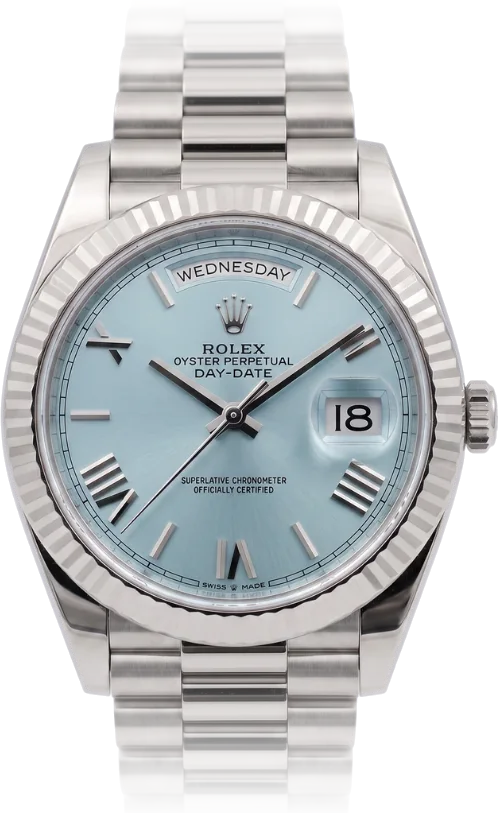
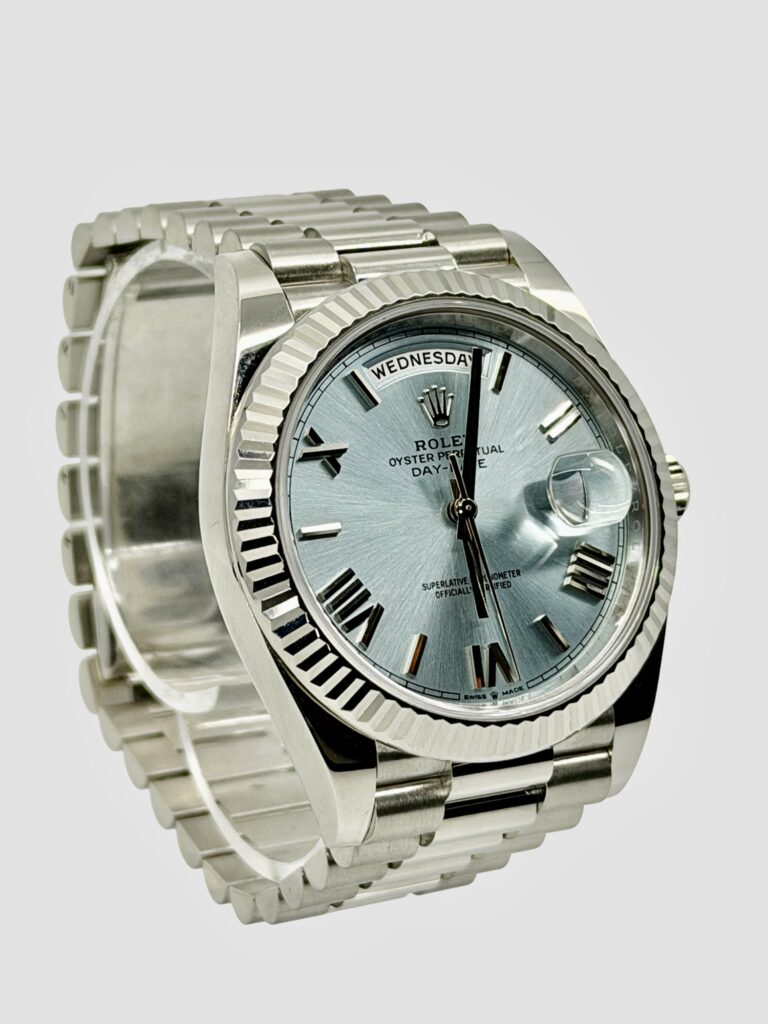
Kings & Queens Watches is an independent dealer and is not affiliated with Rolex.